Knee, hip, shoulder and spine care in Kolkata from a UK-trained consultant who examines you properly, explains your scans on screen, and tells you honestly whether an operation is the right answer.
Three details. The clinic calls you back to fix a time.
So nobody arrives unsure what to expect, or what to bring.
Call, WhatsApp or use the form. The clinic replies the same day during consulting hours.
Old X-rays, MRI films, reports and your current medicines. Old scans are still useful.
A physical examination first, then your scans read with you on the screen.
What is causing it, what can be done without surgery, and what surgery would involve.
You leave knowing the next step and, if surgery is on the table, a written estimate.

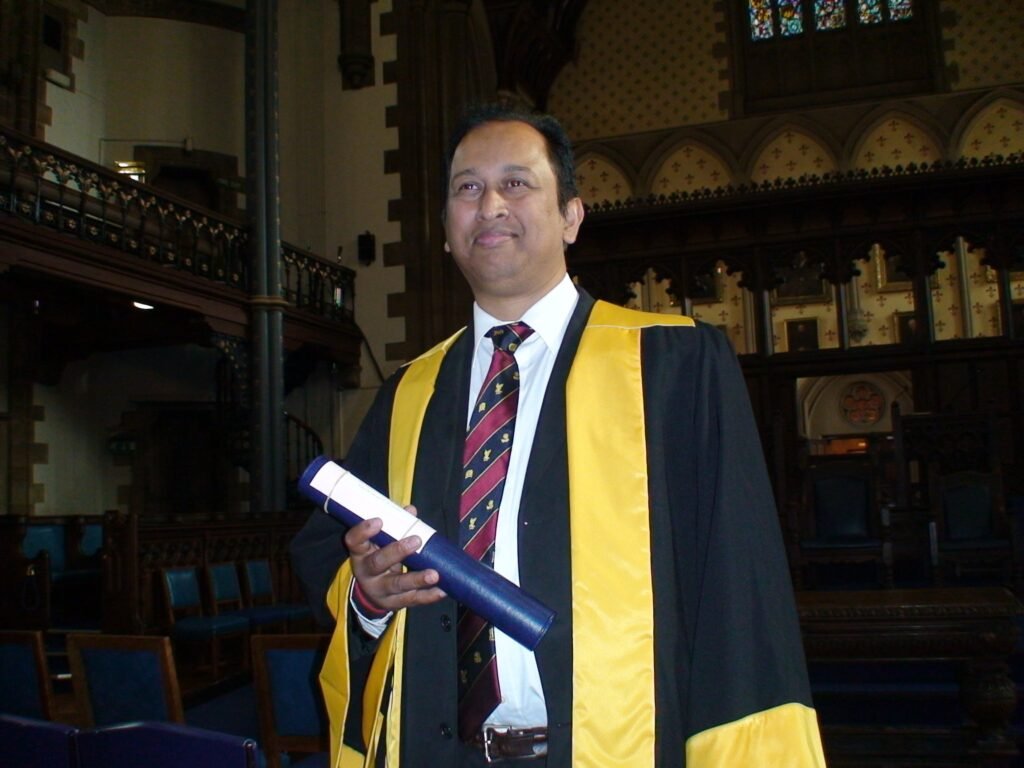
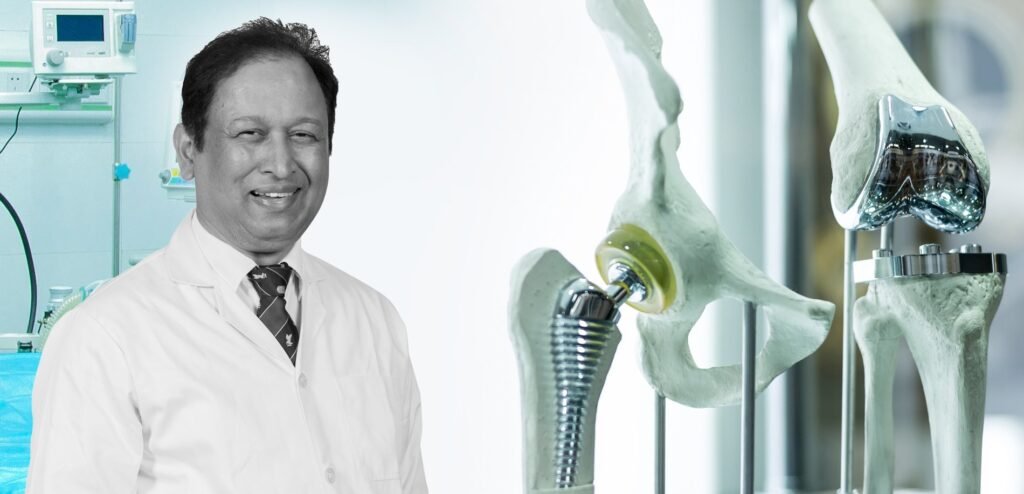
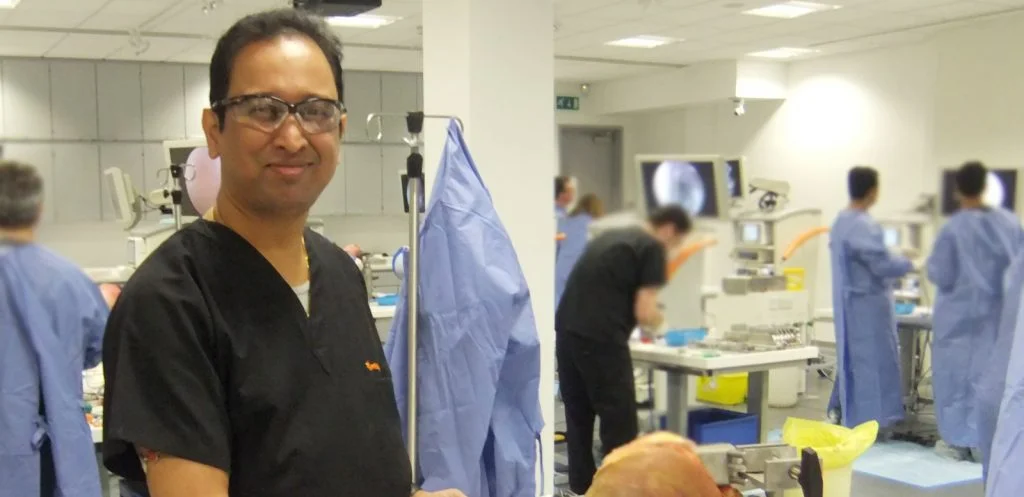
Consultant Orthopaedic & Spine Surgeon. Trained and certified in the United Kingdom, practising in Kolkata, and taking referrals from other surgeons for complex and revision cases.
The most useful thing I can tell many patients is that they do not need an operation. That conversation is worth more than the surgery I did not do.
Pick the area that hurts. Each one explains what usually causes it, what can be done without surgery, and when an operation genuinely helps.
Arthritis is the commonest cause after fifty, but a knee can also give way from a ligament or cartilage injury at any age. The two need very different treatment, which is why examination matters more than the scan alone.
Weight management, targeted physiotherapy, activity change and injections help a great many people for years. This is where most patients start.
When pain wakes you at night, walking distance has shrunk, and the non-surgical options have been genuinely tried. Partial replacement is often possible when only one side of the knee is worn.
Most back pain settles within weeks without any operation. The cases that need a surgeon are those where a nerve is under pressure — and those are usually recognisable from the pattern of symptoms rather than the MRI alone.
Structured physiotherapy, posture and load management, and where appropriate a targeted injection. Time alone resolves a large share of disc problems.
Loss of bladder or bowel control with back pain, or a leg or arm getting rapidly weaker. Call the clinic the same day or go to the nearest emergency department.
Hip arthritis is often felt in the groin and the front of the thigh rather than over the hip itself, which is why it is frequently mistaken for a back problem for months before anyone examines the hip.
Physiotherapy, walking aids and pain management can hold a hip for a long time, particularly in younger patients where delaying replacement is worthwhile.
Hip replacement is one of the most reliably successful operations in medicine. When walking distance and sleep are both gone, waiting rarely improves the outcome.
Shoulder problems are commonly rotator cuff related, and the single most useful clue is whether the pain wakes you when you roll onto that side at night.
A properly supervised rotator cuff programme resolves a large proportion of shoulder pain. Frozen shoulder in particular usually recovers with time and physiotherapy.
A full-thickness cuff tear in an active patient, or persistent impingement that has not responded to a genuine course of physiotherapy.
Scoliosis is almost always noticed first by a parent rather than a doctor. Most curves never need surgery — but the ones that do are far easier to correct while the child is still growing, which is why early assessment matters.
Dr Debnath founded this outreach programme in Kolkata in 2006 with Dr Jeff McConnell of the USA — the first global outreach programme for spinal deformity correction surgery in the city. He is an active member of the Scoliosis Research Society, USA.
Many curves are simply watched as the child grows. Bracing holds others. Surgery is reserved for curves that are large or progressing quickly.
Ligament and cartilage injuries are treated through keyhole surgery where needed, with a rehabilitation plan aimed at the sport or work you actually want to return to.
Many partial tears and cartilage injuries do well with rehabilitation alone, particularly if you are not returning to pivoting sport.
A knee that keeps giving way, a locked knee, or a young athlete intending to return to cutting and pivoting sport.
Short explanations from Dr Debnath. No jargon, no sales pitch.
Real Google reviews from the clinic's patients.
Consulting rooms in Ballygunge, with surgery at five Kolkata hospitals.
10/1D Anil Moitra Road, Swinhoe Street,
Ballygunge, Kolkata 700019
The things people ask on the phone before they book.
The same day during consulting hours, and by the next morning otherwise. If it is urgent, call the clinic on +91 98300 70823 directly rather than using the form.
Any X-rays, MRI films and reports you already have, even old ones, plus a list of your current medicines. If a surgeon elsewhere has advised an operation, bring that advice in writing.
Most patients seen at this clinic are treated without an operation. You will be told plainly if surgery is not the right answer yet, and given a plan for what to do instead.
The bill has four parts: the implant, the hospital, the surgical team and recovery. The implant is the largest variable. The clinic gives an itemised written estimate rather than a single figure, so you can see exactly what changes it.
Yes, at all five hospitals — AMRI, Fortis, Bellevue, Healthpoint and Microlap. Tell the clinic which policy you hold when you book and you will be told what is likely to be covered before you commit.
Yes. Patients travel from across West Bengal, the North-East, Bihar and Bangladesh. Send your scans on WhatsApp to +91 98300 70823 and the clinic will advise whether a visit is needed and what to plan for.
If the pain is stopping you walking, sleeping or working, it is worth having it looked at properly.
Call the clinic+91 983 007 0823