Joint replacement surgery in Kolkata

Knee Replacement Surgery (Knee Arthroplasty) in Kolkata

Primary and revision knee replacement by Prof (Dr) Ujjwal K Debnath, a UK-trained orthopaedic surgeon (FRCS Tr & Orth, DM Nottingham), for lasting relief from knee arthritis pain.

About the operation

What is knee arthroplasty?

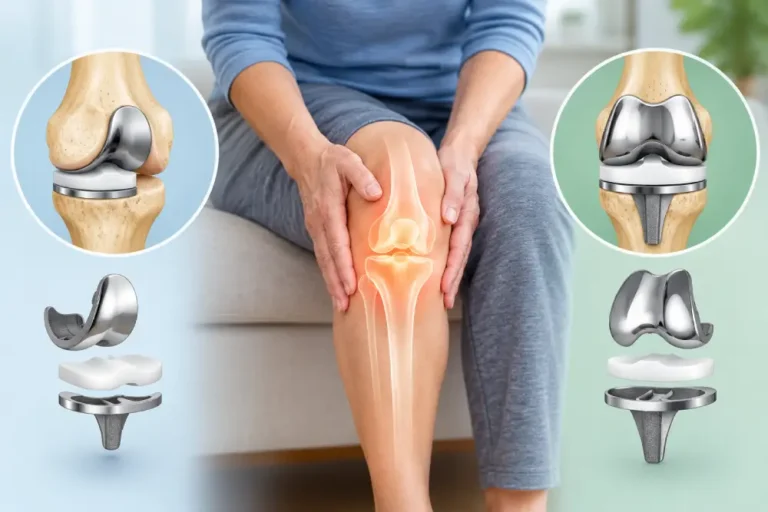
Knee arthroplasty, better known as knee replacement surgery, relieves pain from a badly worn knee. The surgeon removes the damaged cartilage and a thin layer of bone from the ends of the thigh bone (femur) and shin bone (tibia), and caps them with metal components. A smooth medical-grade plastic (polyethylene) insert sits between them so the joint glides freely again. The back of the kneecap may also be resurfaced.

It is one of the most successful operations in orthopaedics. For most people with advanced knee arthritis it brings back pain-free walking, a straighter leg and the confidence to stay active and independent.

  • Operation time About 1–2 hours
  • Anaesthesia Usually spinal, with a nerve block
  • First steps Usually within 24 hours
  • Hospital stay Typically 3–5 days
Knee replacement implant components shown next to an arthritic knee
In a knee replacement, metal components cap the worn ends of the thigh and shin bones, with a smooth plastic insert between them.
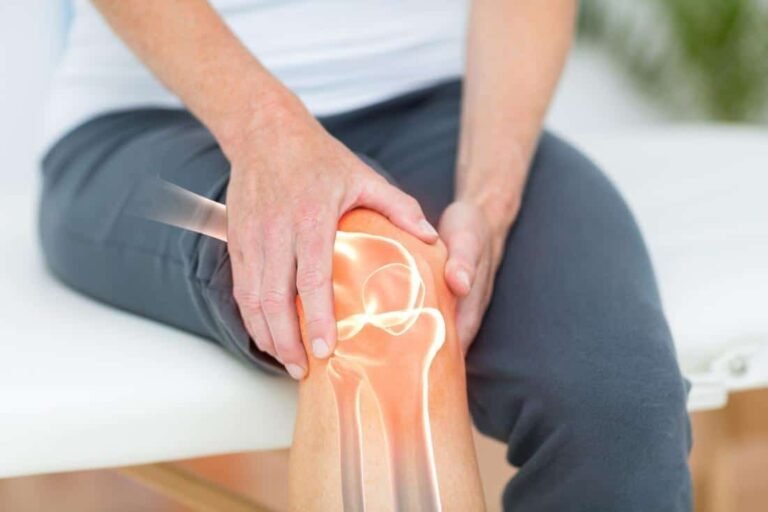
Patient holding a painful arthritic knee joint
Knee arthritis wears away the cartilage that cushions the joint, causing pain, swelling and stiffness.
Is it time?

Signs you may need a knee replacement

Knee replacement is considered when arthritis damage is advanced and pain affects your daily life despite non-surgical treatment.

  • Knee pain that limits walking, climbing stairs or getting up from a chair
  • Pain at rest or pain that wakes you at night
  • Stiffness, swelling or a knee that gives way
  • A worsening bow-leg or knock-knee deformity
  • No lasting relief from medicines, physiotherapy or injections

Conditions treated with knee arthroplasty

  • Osteoarthritis
  • Rheumatoid arthritis
  • Post-traumatic arthritis
  • Avascular necrosis
  • Severe knee deformity

Surgery is not the first step. Weight control, strengthening exercises, physiotherapy, pain medicines, injections and walking aids are tried first. Prof (Dr) Debnath recommends replacement only when these no longer give you an acceptable quality of life.

Treatment options

Types of knee replacement surgery

The right operation depends on how much of the knee is damaged, your ligaments, your age and your activity level.

Total knee replacement (TKR)

All the joint surfaces of the knee are replaced. This is the most common operation for advanced arthritis, and it can also correct a bow-leg or knock-knee deformity.

Suited to: arthritis affecting more than one part of the knee.

How joint replacement helps →

Revision knee replacement

A second operation to replace an earlier knee replacement that has worn out, loosened, become infected or unstable, or remains painful. It is more complex than a first replacement and may need special implants, stems or bone grafts to rebuild lost bone.

Suited to: a previous knee replacement that is failing or causing problems.

Get a second opinion on your knee implant →

Bilateral knee replacement

When both knees are badly affected, they can be replaced in the same operation, with one anaesthetic and one rehabilitation period, or in two stages a few weeks apart.

Suited to: fit patients with severe arthritis in both knees, after a careful health check.

Both knees at the same time →
Step by step

Your knee replacement journey

What to expect from the first consultation to getting back on your feet.

  1. Step 1
    Consultation

    Examination and standing X-rays

    Your knee is examined and weight-bearing X-rays show how much of the joint is worn. Non-surgical options are discussed first, and surgery only if it is right for you.

  2. Step 2
    Preparation

    Pre-operative health check

    Blood tests, ECG and an anaesthetic review make sure you are fit for surgery. Diabetes, blood pressure and other conditions are brought under control beforehand.

  3. Step 3
    Surgery day

    The knee replacement operation

    Usually done under spinal anaesthesia with a nerve block for pain relief. The worn surfaces are replaced and the implant is aligned and balanced to your ligaments.

  4. Step 4
    In hospital

    Early walking and physiotherapy

    Most patients stand and walk with a walker within a day of surgery. The physiotherapist teaches bending exercises and safe stair climbing before you go home.

  5. Step 5
    At home

    Rehabilitation and follow-up visits

    Daily home exercises rebuild strength and movement. Stitches or clips are removed at about two weeks, and follow-up visits check your progress and X-rays.

Recovery

Recovery after knee replacement

Recovery is gradual, and the work you put into your exercises makes a big difference. A typical timeline looks like this:

  • Day 1

    Standing and walking with a walker, and starting knee-bending exercises.

  • Days 3–5

    Home, walking with support and managing stairs.

  • 2–3 weeks

    Wound checked and stitches removed. Many patients move from a walker to a stick.

  • 6 weeks

    Most daily activities, short walks outdoors and, for many, driving again.

  • 3 months

    Most swelling has settled. Walking, travel and light leisure activities are comfortable.

  • Up to 1 year

    Strength and movement keep improving as the knee fully settles.

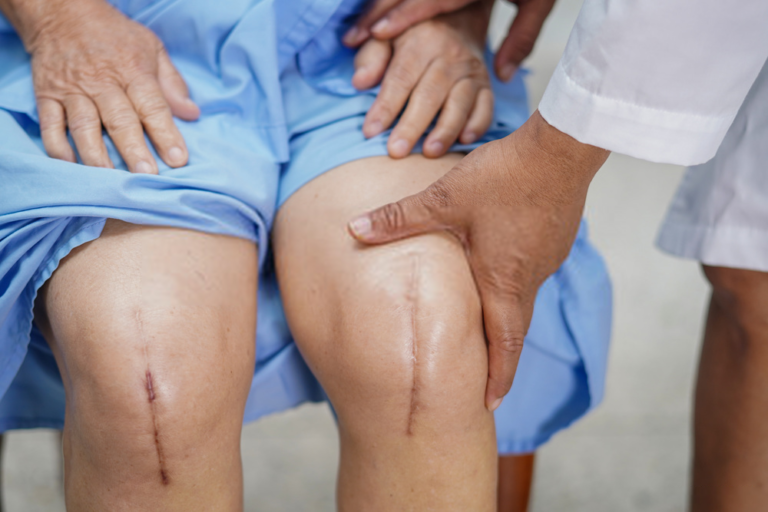
Healed scars after bilateral total knee replacement being checked by a doctor
Healed scars after a bilateral (both knees) knee replacement, at a follow-up check.

Benefits of knee replacement

  • Lasting relief from arthritis pain, including pain at night
  • A straighter, more stable leg
  • Walking further, and climbing stairs more easily
  • Less reliance on painkillers
  • Getting back to work, travel and an independent life

Risks to discuss with your surgeon

  • Infection of the wound or the joint (uncommon)
  • Blood clots in the leg veins, reduced by early walking and preventive medicine
  • Stiffness or some ongoing discomfort
  • Wear or loosening of the implant over many years
  • Rarely, injury to nearby nerves or blood vessels
Your surgeon

Why choose Prof (Dr) Ujjwal K Debnath for knee replacement in Kolkata?

FRCS (Trauma & Orthopaedics), UK

Specialist fellowship in trauma and orthopaedics from the UK Intercollegiate Board, with a CCT (UK) completed in 2009.

Doctorate in Medicine, Nottingham

DM (Orth) from the University of Nottingham, a rare research degree for an Indian orthopaedic surgeon.

Trained in UK NHS hospitals

Years of orthopaedic training in the United Kingdom, including Royal Gwent Hospital, Newport and University Hospital, Nottingham.

Care planned around you

An honest assessment, non-surgical options first, and a clear rehabilitation plan if you choose surgery.

See Prof (Dr) Debnath's qualifications →
Patient questions

Knee replacement FAQs

How long does a knee replacement last?

Modern implants are very durable. Large international studies show that about 8 in 10 total knee replacements are still working 25 years after surgery (The Lancet, 2019). Keeping a healthy weight and staying active helps your new knee last. If an implant does wear out, a revision knee replacement can replace it.

How soon can I walk after knee replacement surgery?

Most patients stand and take their first steps with a walker within a day of the operation, with a physiotherapist's help. Walking early speeds recovery and lowers the risk of blood clots.

How long will I stay in hospital?

Usually 3 to 5 days, depending on your general health and how quickly you can walk and manage stairs safely.

Is knee replacement surgery painful?

There is some pain after any operation, but spinal anaesthesia, nerve blocks and regular pain medicines keep it under control. Most patients find that the constant arthritis pain they had before is gone once the knee has healed.

Can both knees be replaced at the same time?

Yes, for suitable patients. A bilateral knee replacement means one anaesthetic and one recovery period, but it is a bigger operation, so your heart, lungs and overall fitness are checked carefully before it is advised.

Am I too old for a knee replacement?

There is no fixed age limit. The decision depends on how much the knee affects your life and on your general health, not on age alone. Many patients in their 70s and 80s have successful knee replacements.

When can I drive and go back to work?

Most people can drive again at around 6 weeks, once they can control the car safely, and return to desk work in about 6–8 weeks. Physically demanding jobs take longer.

Can I sit cross-legged or squat after knee replacement?

Deep squatting and sitting cross-legged on the floor put very high stress on a replaced knee and are generally best avoided. Your surgeon will advise you on the range of movement you can expect and the activities that are safe for your implant.

This page gives general information about knee replacement surgery and does not replace a personal medical consultation. Recovery times vary from person to person.

Appointments

Book a knee replacement consultation in Kolkata

Living with knee pain? Get an expert opinion from Prof (Dr) Ujjwal K Debnath on whether knee replacement, or a non-surgical treatment, is right for you.

Prefer to talk? Call +91 98300 70823

Appointment Booking

Fill in the Form or call us directly at (+91) 983-007-0823
Appointment Form