Upper Limb Fracture · Part 1 5 min read
A fall, a crack, and a decision that matters more than people think

The fractures I see most often
Each part tends to break in a particular way and in a particular kind of patient.
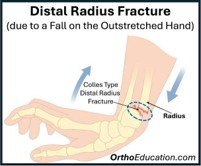
Wrist (distal radius) fracture. The commonest fracture in adults, especially in women over fifty after a simple fall at home. It is often the first sign of weak bones.
Scaphoid fracture. A small bone at the base of the thumb. It is easily missed on the first X-ray, and a missed scaphoid fracture can lead to arthritis of the wrist.
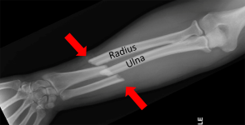
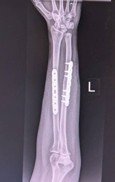
Forearm fractures. Both bones of the forearm can break together after a high-energy fall or road accident, and in children after falls from trees, cycles and play equipment.
What to do in the first hour
Good first aid makes the rest of the treatment easier. If you suspect a broken arm:
- Keep the arm still. Make a sling out of a scarf and hang it.
- Remove rings, bangles and watches at once.
- Apply ice wrapped in a cloth for 15 to 20 minutes and keep the hand raised above the heart.
- Do not let anyone pull or straighten the arm.
- Get an X-ray the same day and see an orthopaedic surgeon.
A word about traditional bone-setters
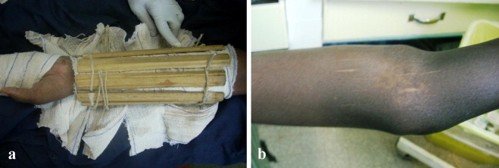
Many people in Bengal and other states trusted local bone-setters for generations. But a significant number of the difficult cases I treat began with tight bamboo splints or bandages applied without an X-ray. The common results are a bone that has joined crooked (malunion), a bone that has not joined at all (non-union), and in children a serious loss of blood supply to the forearm muscles that can permanently claw the hand.
Therefore avoid bone-setters
Plaster or surgery: how I decide
Not every fracture needs an operation. In my experience, the majority of wrist or forearm fractures without displacement heal well in a plaster cast, a splint or a sling. I recommend surgery only when the fracture needs to be relocated to anatomical position clearly gives a better result. The questions I ask are:
Is the fracture displaced? If the broken ends have moved apart or tilted, they may need to be put back and held.
Does the break enter a joint? Fractures into the wrist or elbow joint need a smooth joint surface, or arthritis follows.
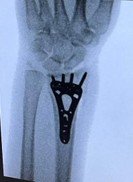
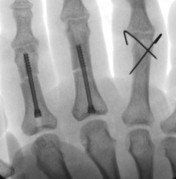
Is it stable? Some fractures slip inside a plaster. These are better fixed with a plate, screws or wires.
Who is the patient? A young manual worker, a dentist who needs precise wrist movement and an eighty-year-old with a sedentary life may get different advice for the same X-ray.
When surgery is needed, modern implants such as locking plates allow early movement. Many patients start gentle finger and wrist exercises within days rather than waiting six weeks in plaster.
How long does it take to heal?
These are typical ranges for healthy adults. Children usually heal faster; older people, smokers and people with diabetes take longer.
| Fracture | Usual treatment | Bone healing | Back to most daily tasks |
|---|---|---|---|
| Wrist (distal radius) | Plaster or plate | 6–8 weeks | 8–12 weeks |
| Scaphoid | Plaster or a single screw | 8–12 weeks, sometimes longer | 10–14 weeks |
| Forearm, both bones (adult) | Usually plates | 8–12 weeks | 10–16 weeks |
Recovery: the part patients underestimate
The bone may heal in six weeks, but the hand, wrist and shoulder need longer to recover strength and movement. From the first day, I ask patients to move their fingers fully, many times a day, even inside a plaster. Once the plaster comes off, a structured physiotherapy programme brings back grip, rotation of the forearm and lifting.
When to see an orthopaedic surgeon
Urgently visit an orthopaedic surgeon
At my clinic in Ballygunge we read your X-rays with you on the screen and explain whether plaster or surgery is right for your fracture, with a written estimate if an operation is needed. Call +91 98300 70823, or send your X-ray on WhatsApp and the clinic will advise you on the next step.
This article provides general information and is not a substitute for a consultation.

Frequently Asked Questions
How long does a broken wrist take to heal?
The bone usually heals in six to eight weeks. Full grip strength and movement often take three months or more, with physiotherapy after the plaster comes off.
Do all fractures need surgery?
No. Most arm fractures heal well in a plaster, splint or sling. Surgery is advised when the bone is badly displaced, unstable, or broken into a joint.
Can a hairline fracture heal on its own?
Many do, but only if the arm is protected properly. A hairline scaphoid fracture in particular needs a plaster and a follow-up X-ray, because it can fail to join.
Is it safe to go to a traditional bone-setter?
I advise against it. Splinting without an X-ray can let the bone join crooked or not at all, and tight bandages can damage blood supply, especially in children.
When can I write, type or ride a bike after a wrist fracture?
Light writing and typing usually return within a few weeks of the plaster coming off. Riding a two-wheeler needs a strong grip, often around ten to twelve weeks.
My elderly mother broke her wrist in a simple fall. Should she get a bone test?
Yes. A fracture from a simple fall often signals osteoporosis, and treating it lowers the risk of a hip fracture.